supporting evidence · imagery from the working CAD or the bench
Four working projects — the evidence
behind the skills matrix. All real, all running or on
the bench today.
CASE 01
The Home Assistant estate
Status in productionStack Home Assistant · Python · ClaudeProof 4 silent failures caught in one audit
One property — house, greenhouse, lawn, theatre, print farm — run by
38 scheduled AI agents on top of Home Assistant: standups, triage,
watchdogs, desk reports, a night audit. The interesting part is the
instrumentation — a run recorder logs what each agent wrote, and a watchdog
compares file timestamps against the scheduler, because “the task fired”
and “the work happened” are different claims. A single audit pass caught
four agents firing on schedule and writing nothing — one quiet for two weeks.
If an agent can fail silently, it isn't finished. That rule is most of the product.
By the numbers
Agents on schedule 38
Standup + CEO reports daily
Watchdog truth source file writes, not logs
Night audit independent model cross-review
Silent failures caught 4 in one pass
Screens driven office TV · theatre · tablets · kiosk
Anything public human-approved, per item
CASE 02
GrowV1 — a greenhouse sensor line
Status hardware in the fieldStack OpenSCAD · PETG · ESP32 · solarProof ~2.2 Wh/day node budget
A three-product line designed, printed, and flashed in-house for a backyard
greenhouse: the Pod (ESP32-CAM climate + camera node), the
Solar Power Box that feeds it, and TURF, a micro
soil sensor (case 03). The unglamorous work is power — nodes sleep on a
one-hour duty cycle and burn about 2.2 Wh a day, sized for
December in Ontario, not a demo in July. Every enclosure is parametric OpenSCAD,
mesh-verified before slicing, because a printer will happily spend six hours
manufacturing a mistake.
Products Pod / Power Box / TURF
Node power budget ~2.2 Wh/day, 1-h duty cycle
Autonomy, no sun ~12 days on a small pack
Pipeline CAD → verified STL → firmware → HA
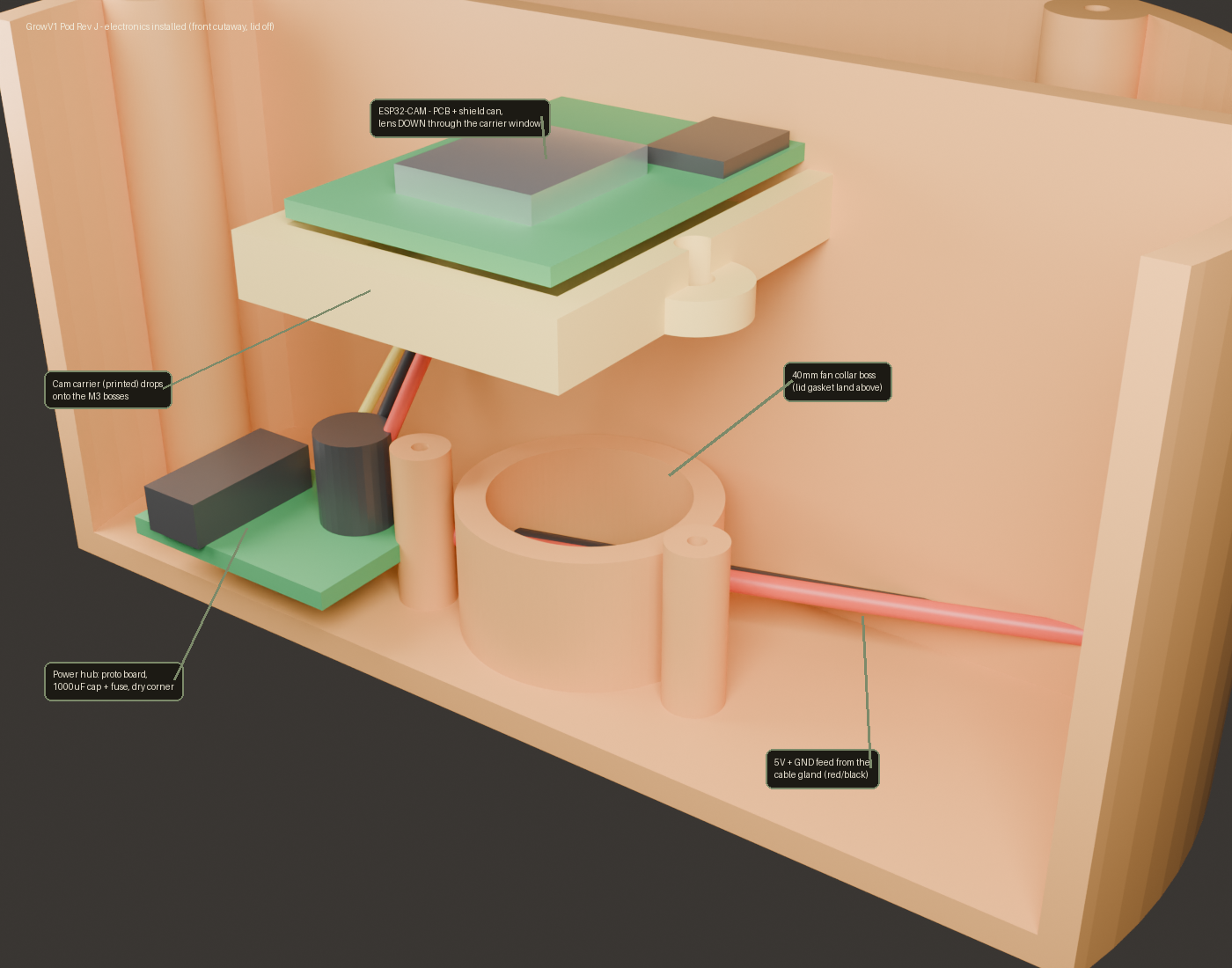
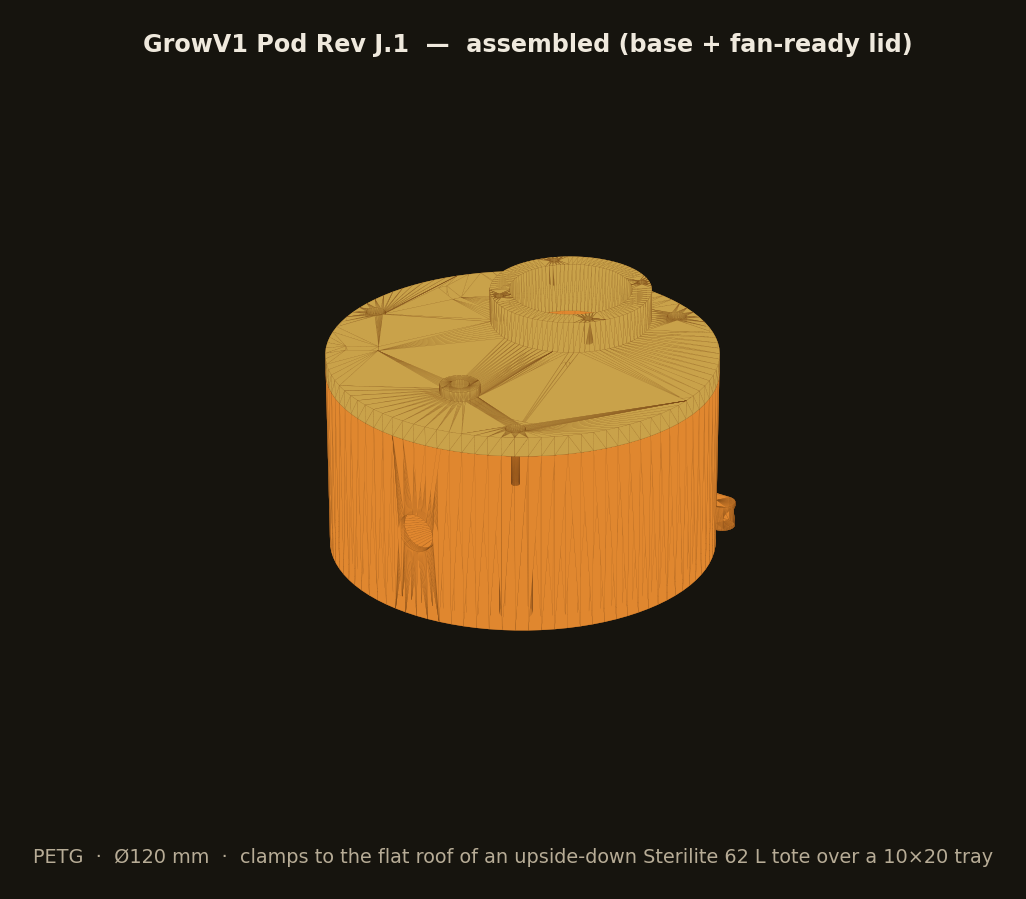
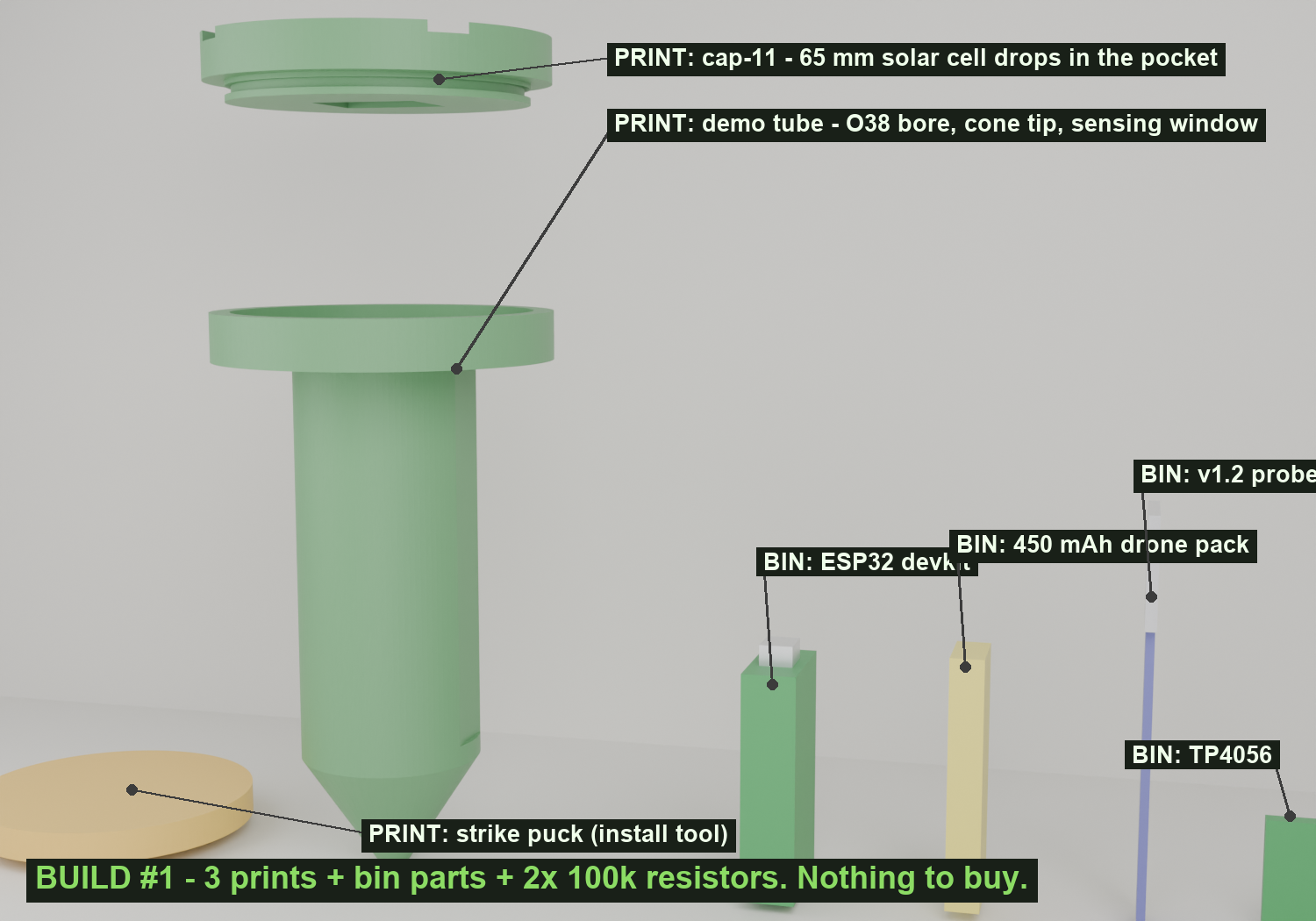
Pod on the bench — wired, pre-lid. A real unit.Pod Rev J.1 — render from the working CAD.TURF build #1 — three prints + bin parts.
CASE 03
TURF — rev B to rev G in a day
Status Rev F built · Rev G drawnStack parametric CAD · mesh QC · ESP32Proof six revisions, one bench, one day
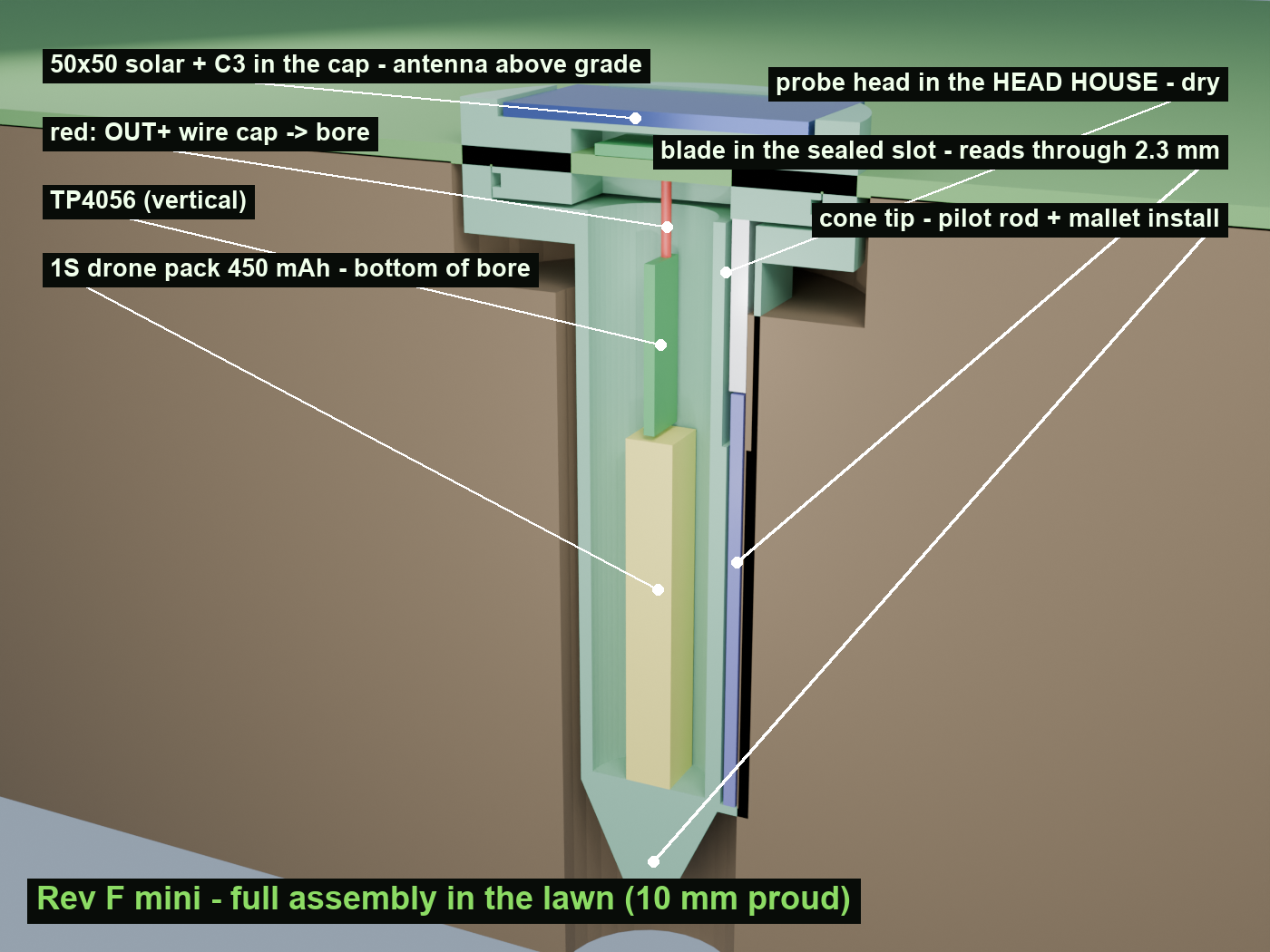
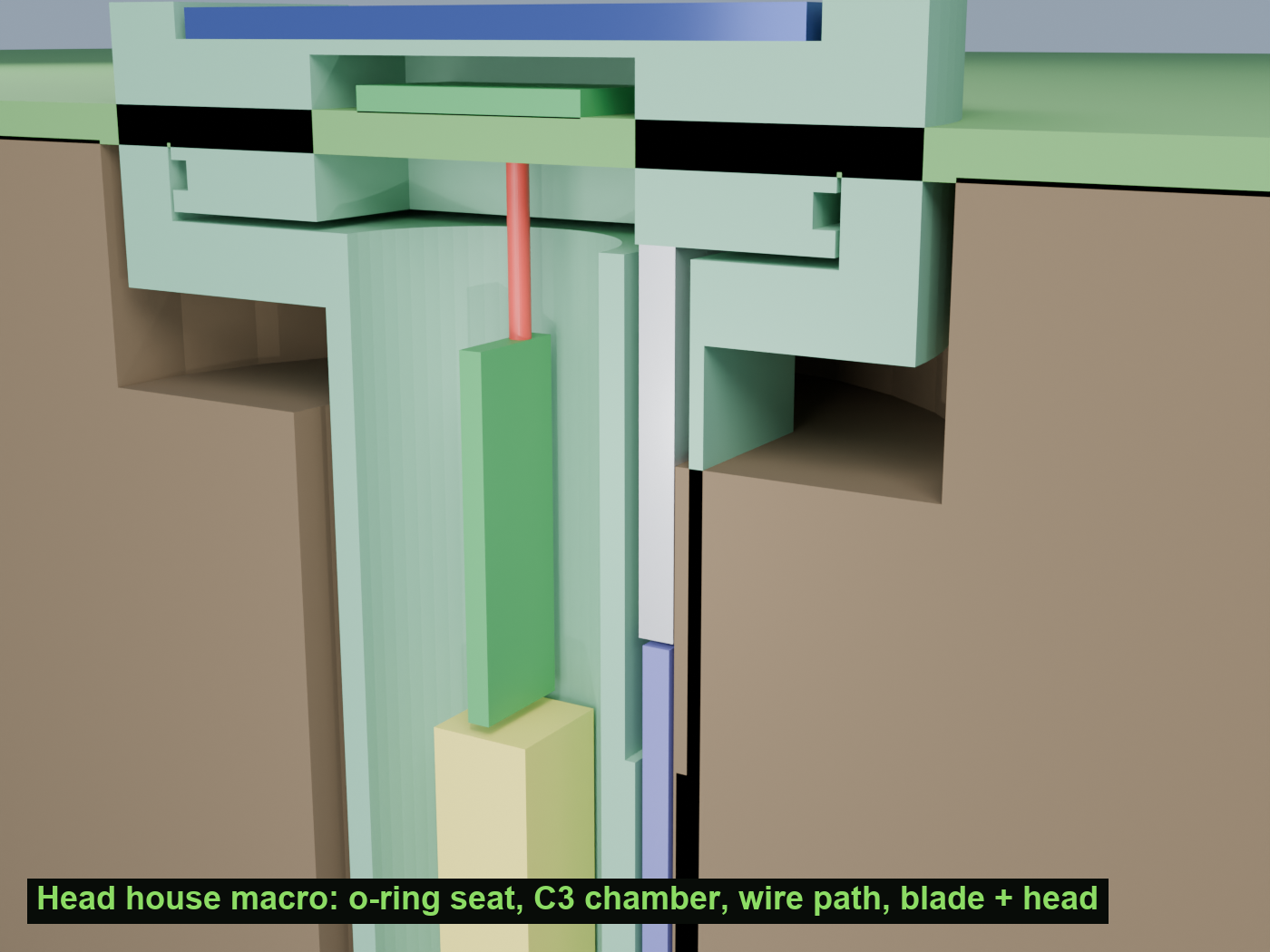
TURF is a micro soil-moisture sensor that installs like an irrigation
peg — a Ø64 mm cap carrying a 50×50 solar cell, sitting
10 mm proud so the mower passes straight over it. It went from rev B to rev G
in a day: parametric CAD, mesh-verified STL, firmware, and live readings in Home
Assistant the same evening. The revisions were earned, not cosmetic — rev A
trapped its own battery; rev G swaps radio for a wired RS-485
Modbus variant, drawn and deliberately unprinted until the real probe is
measured.
An iteration that costs an hour changes what you're willing to fix.
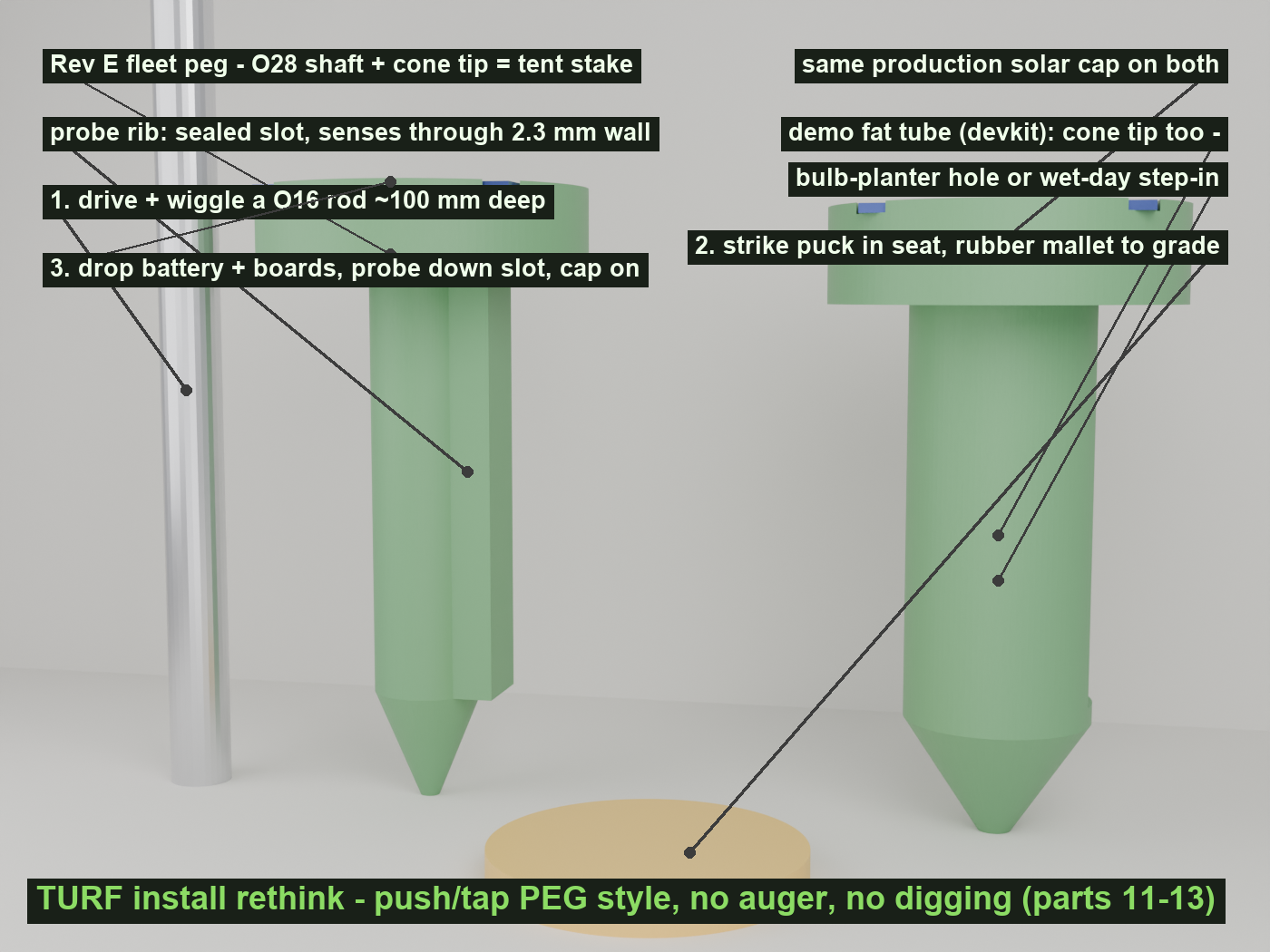
The peg family — annotated render from the working CAD.Mini peg, cutaway — cell, radio, probe path.Head-house macro — o-ring seat, chamber, wire path.
CASE 04
Put A Hat On It — an AI product pipeline with a storefront attached
Status live · putahatonit.caStack Blender · static site · vision QCProof renders derive from the print files
putahatonit.ca sells 3D-printed hats for
robot mowers and vacuums — and is the testbed for a full AI product pipeline:
design → render → copy → staged social, with a human
approval gate on everything that publishes. The honesty rules are mechanical:
renders are built in Blender from the actual print CAD in true
filament colours, and AI lifestyle images must pass a QC gate that has already
bounced an image missing the product. The catalog rebuilds from approved SKUs only;
the site is static on Cloudflare Pages, like this one.
Also on the bench:Datsun 260Z Pi telemetry (planned)Marketplace scout (live)Maple propagation program (stratifying)Greenhouse winter build — climate battery + thermal reservoir (scoped)